Two Thousand Years of Non-Urban History revisits the founding principles of architectural and landscape discourse in the Arabian Peninsula. The publication explores instances of pre-oil planning, ranging from desert kites to fish traps and water channels, upending the toolset for thinking through architecture’s relationship to its context.
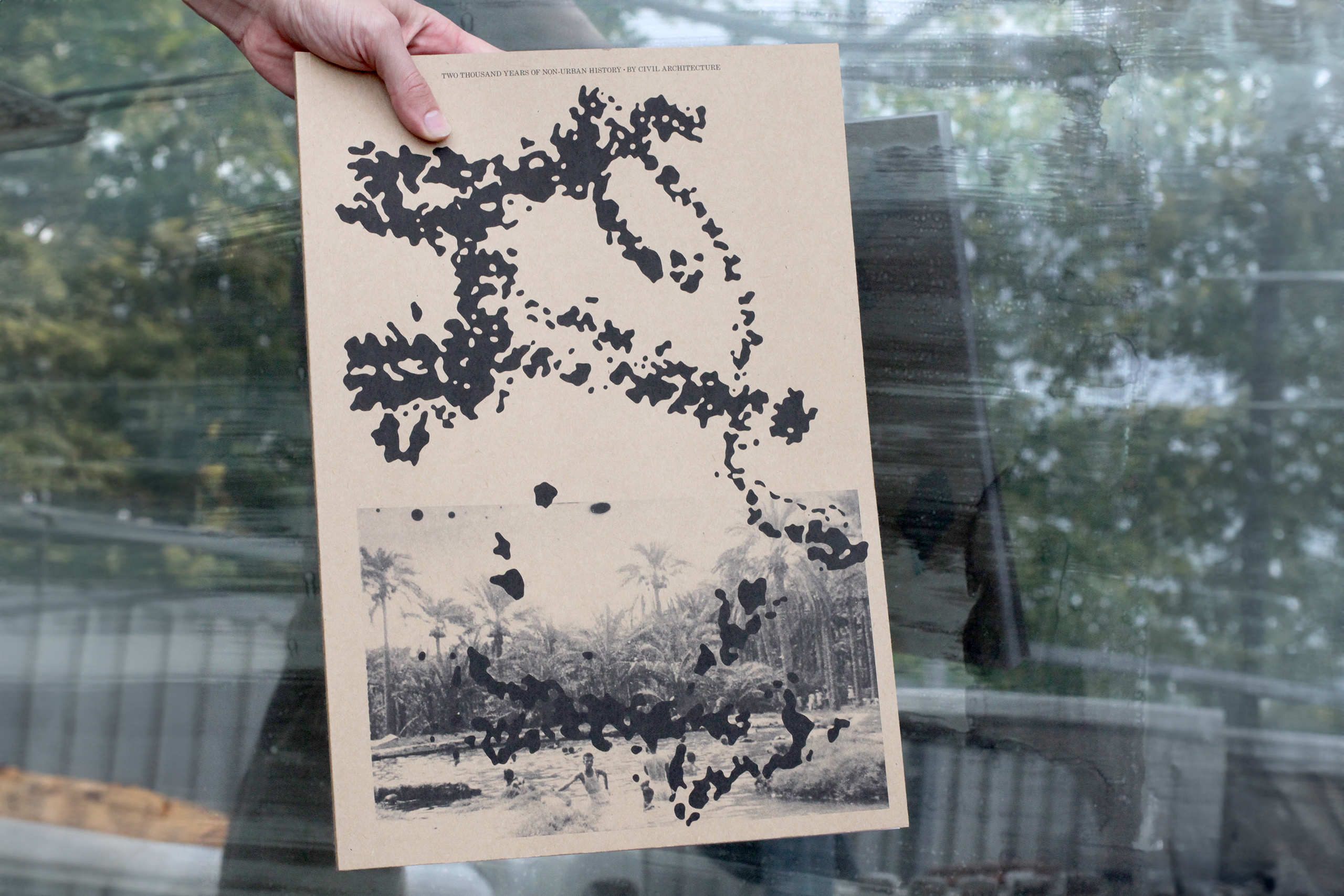
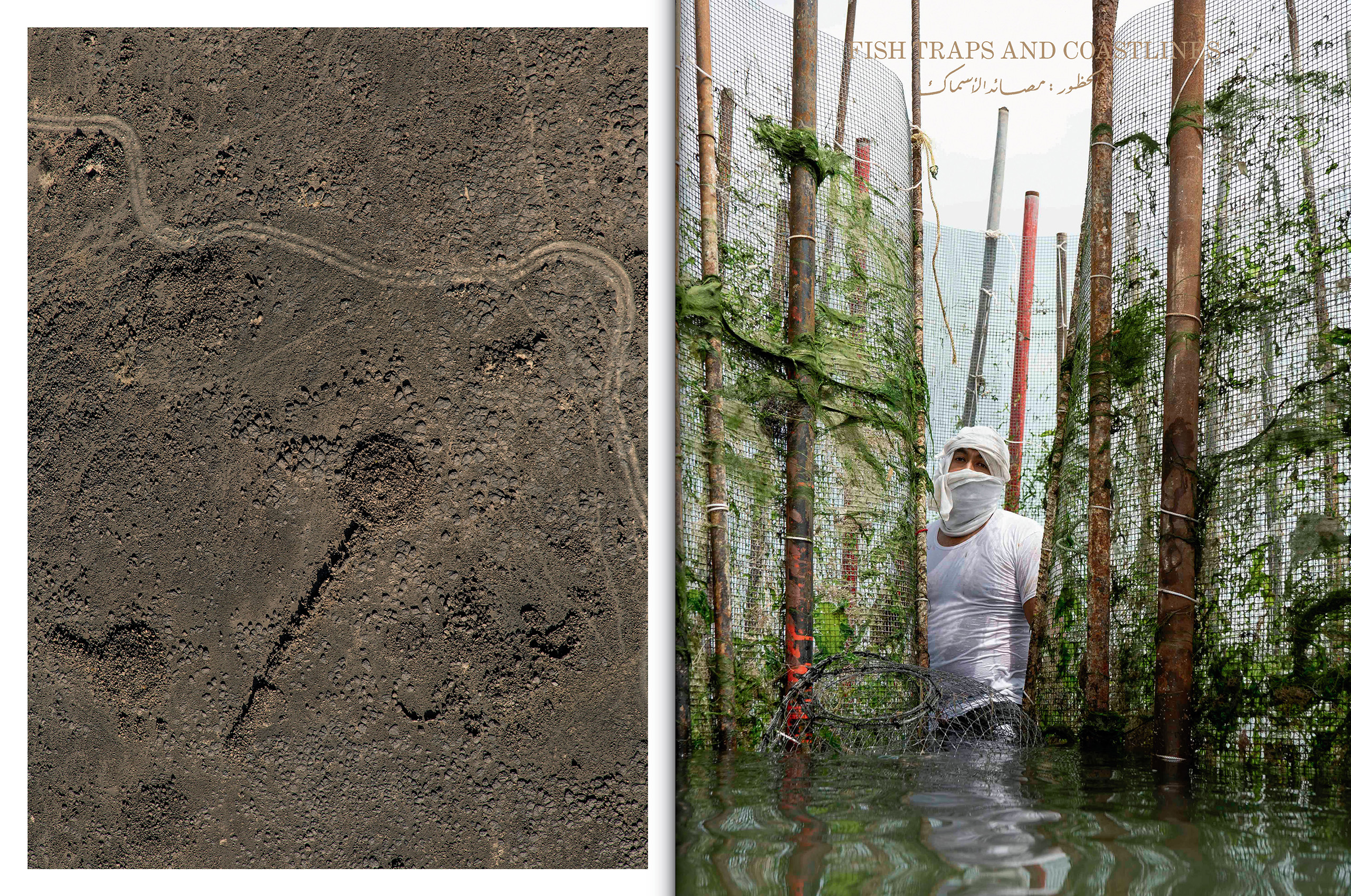
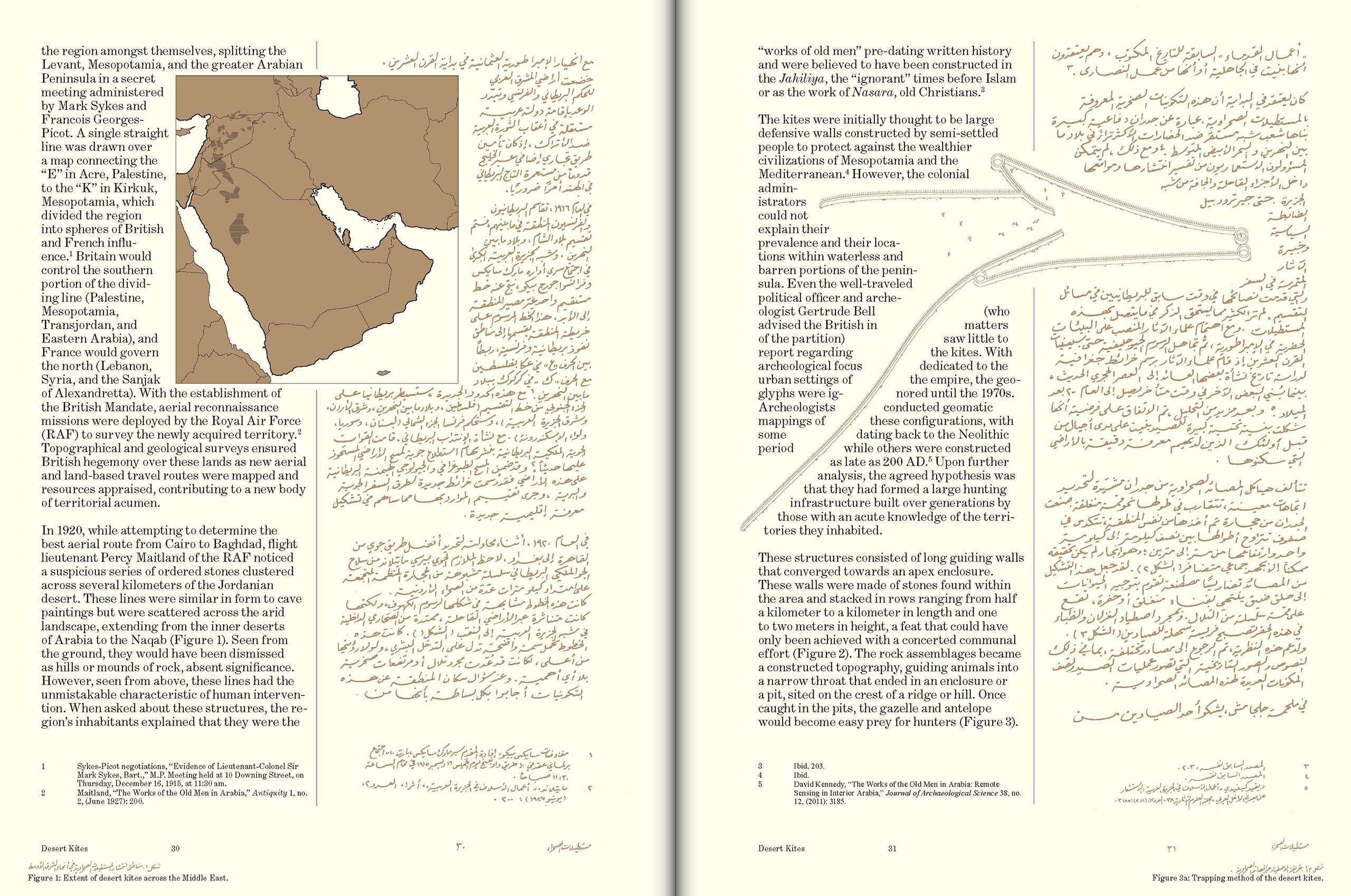
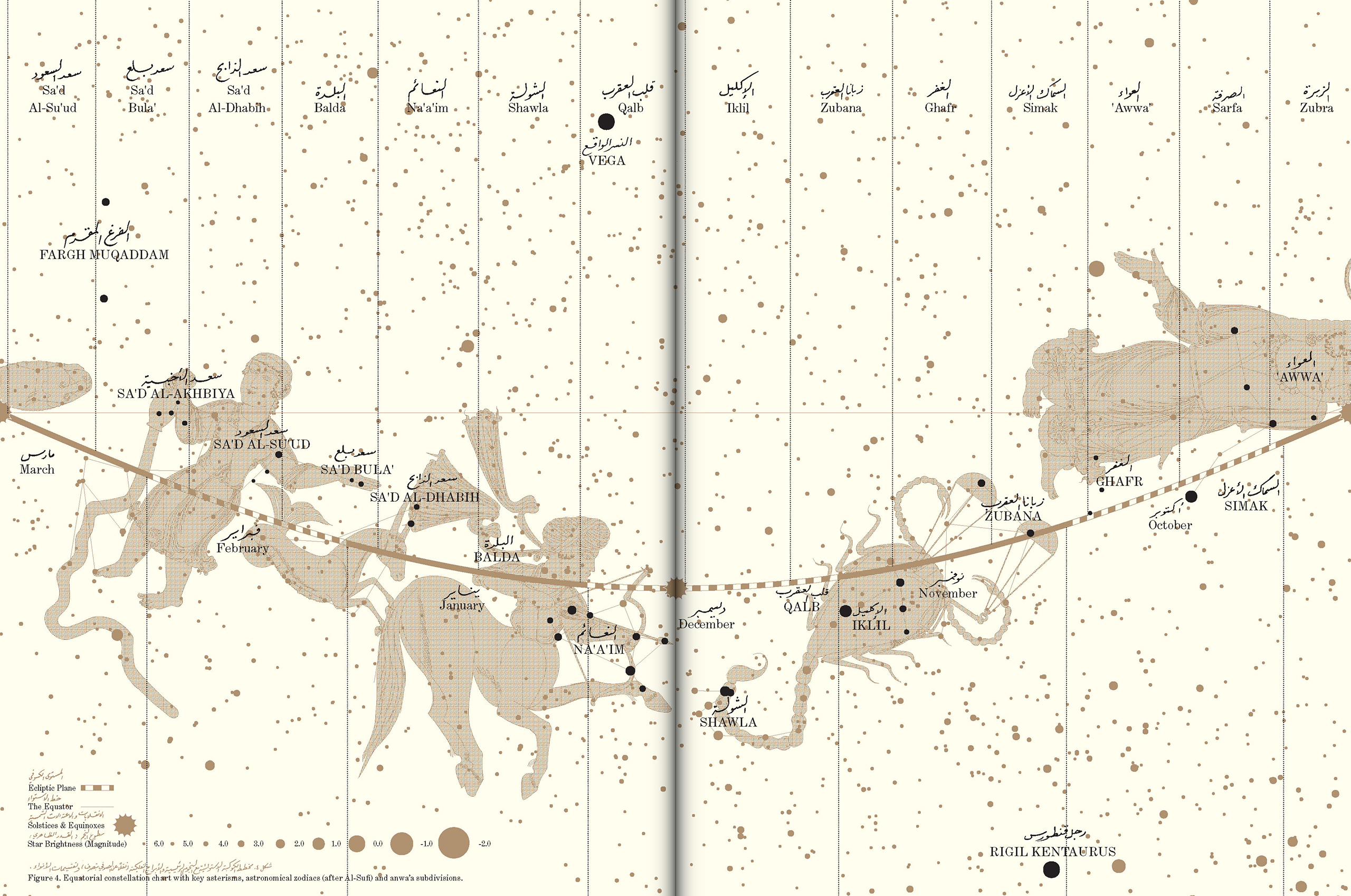
The narrative of the oil economy has overwritten previous traditions of landscape and territory: long spans of highway cut disinterestedly across the desert, vast reclamation works alter the shoreline, and agricultural land is extensively cleared to build new cities. This totalizing mono-myth renders previous spatial narratives as a distant pre-history, more fable than precedent. Two Thousand Years of Non-Urban History acts as a primer to the spatial history of the Arabian Peninsula, compiling narratives related to geology, agriculture, mariculture, and seasonality—providing an alternative genealogy and history from which to reimagine the region. This treatise by Civil Architecture also includes an appendix of the practice’s projects, expanding on the themes of the publication with possible trajectories for architectural intervention.
TEXT:
CIVIL ARCHITECTURE (ALI ISMAIL KARIMI & HAMED BUKHAMSEEN)
FOREWORD:
RANIA GHOSN
AFTERWORD:
AHMAD MAKIA
RESEARCH TEAM:
FATIMA NICKAHDAR, FAY KAZROONI, HANAN ASHHAD, JAFFAR HADDAD, ALANOOD ALKHAYAT
COPY-EDITING:
JAKE STARMER
TRANSLATIONS:
GHADEER ALKHENAIZI
FOREWORD AND AFTERWORD TRANSLATION:
JUMANA ALGHASSAB
CALLIGRAPHY:
HASAN JABER ALBARDISI
PUBLISHING:
KAPH BOOKS
PRINTING:
LONGO
DESIGN:
STUDIO LOB (JANNIS ZELL & PHIL ZUMBRUCH)